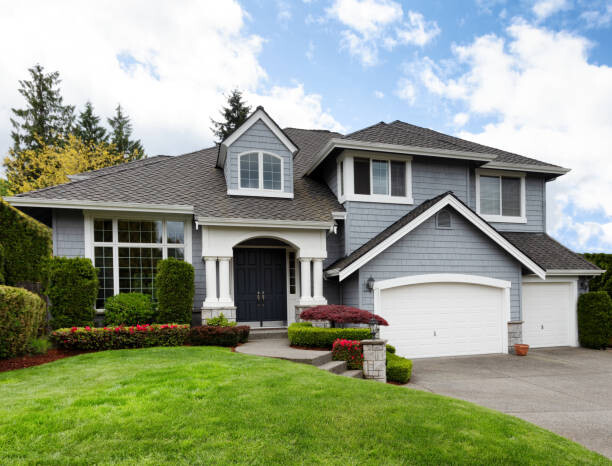
Yes, that is what I am referring to. The tag is in use and can be found in the table of values to building=* included in the wiki page for building=house but there is no documentation for the tag itself.
And my opinion ist still that it is better to give that tag some kind of a rough definition (as already drafted above) instead of letting every user make up his mind how to use it.
I see there is a cluster in Genoa, I think all from one mapper 11 years ago. These don’t generally seem to have the “considerable outdoor grounds” characteristic, and judging by the narrow streets, they look like they were probably in an urban area even when built.
Usually I would not hesitate to write a wikipage for an existing tag unless there is a consensus to deprecate the tag to avoid further use. In view of the different opinions expressed here I have now made a draft, trying to consider also those participants who are not really happy with that tag:
The term villa originates from Latin and is nowadays in many European countries predominantly associated with prestigious residential buildings where architectural design takes precedence over pure utility value. In other countries, however, the term can also have a completely different meaning.
There is no clear definition, and the distinction from general residential buildings is fluid; whether a building is to be regarded as an average single-family or multi-family house or as a villa is at the discretion of the observer.
The use of the tag building=villa is therefore controversial. To ensure distinction from other established building tags, only buildings that fulfill the following criteria should be tagged as building=villa:
It is a detached single or multi-family residential building.
It is significantly larger than an average house of the same classification.
It has an individual/representative architectural design.
It is usually located outside the densely built up city areas.
Furthermore, the building often is surrounded by a large sized and individually designed garden. Many villas are located in particularly spacious suburban areas, known as “villa districts” in several countries.
However, there are also urban villas with relatively small plots. These often have elaborately designed impressive façades but rather inconspicuous rear sides that are not visible from the street.
If these criteria are not met or you are in doubt, you should use other building tags such as building=detached. This does also apply to houses having been named by the owner as “Villa *****”, as a name only does not make a villa.
Just let me know it this is acceptable so that we can close this topic and move on.
It’s a great start, but I’d make sure to include some images to make the points clearer, possibly even two sets of images to illustrate the two clusters that @Vinzenz_Maidescribed.
It might also be worth reviewing the Genoa cluster that @alan_grfound and deciding whether those match any of the descriptions listed in this thread. I suspect these may be outliers.
Also, I have a couple questions about the wording you used in some passages:
If you’re covering both possibilities, why bother specifying at all? Wouldn’t it be easier to simply say “detached residential building”?
What exactly does “of the same classification” mean here? Maybe it would be better to be more specific.
A villa can’t be semi-detached? Surely this below is a villa—and gated communities with semi-detached villas are way more popular where I live (because they take up less space). So I would definitely also qualify them as villas. I agree with the rest of what you’re saying though, “villa” is more precise and better than “house”.
I had thought a villa was a free standing detached house. But from the last few posts it seems it can also be a semi detached house or a multi family apartment building.
The widely used building tags normally allow mappers to distinguish between those building types. But if villa ia used as the primary tag, that information would be lost. There would be no way for a user of map data to know if a building is a large house or an apartment building.
Should the documentation suggest a way to avoid losing that information?
I know several communities like this. Normally all the houses have broadly similar designs. Would you consider them all villas? From previous discussions I thought some level of architectural uniqueness was required.
To be honest, this example just looks like a normal house at the upper end of the market to me (but not the top end, as really rich people don’t share a wall with their neighbours). It would never have occurred to me that it needs a special primary tag.
No, it’s just a posh house that an estate agent wanted to charge more money for.
The building type in OSM is just that - a building type. The word “villa” isn’t being used for that here - it’s simply saying “this is a better or more expensive X than other Xs of the same type”. That might be worth recording somehow in OSM if some sort of verifiable tag can be found - but it doesn’t replace the building type.
I’m saying, this is called a villa here, not that I think this is called a villa. The definition obviously varies from country to country…
Yes, absolutely. How can they make a different architecture style for each unit in a 54-villas housing estate? They may be (logically) similar at the gated-community level but they’re different from other houses outside of that gated community. Once again, it’s not that deep, as the term differs a lot between countries, and especially between the US, the UK and the Mediterranean countries, where the term seems more widespread. When I think about the term “house” I think about those suburban houses that you can find in the USA or Canada, and I can personally see a big difference between this and a villa. It may not be the case for everyone.
OSM uses British English tags and values. You can’t do that here, because “villa” simply doesn’t mean that in the UK (other than a term to add a few quid to the price, or describing a roman farmstead from 2000 years ago). If you had to define this type of house using words, how would you do that?
I understand that, but are you saying the tag should be used according to what “villa” means in each country, rather than trying to document a broadly consistent meaning globally? How would villa then be more precise than house, as you suggested?
(This kind of house is sometimes called a “chalet” in Spain, so the same logic would suggest building=chalet… but let’s not go there).
I wouldn’t expect them to. It’s just that the whole concept of a 54 villa housing estate of similar houses seems to contradict earlier definitions in this thread which suggested a more customised design.
I honestly still don’t understand the difference. Obviously the specific examples are very different (pitched versus flat roofs and so on). But I don’t understand what differences contribute to villa-ness, based on these examples.
That seems a better idea. It would avoid losing information about the main building type while allowing mappers who feel a villa is something objective to express that, on the understanding there is no global meaning (and specifically that it does not correspond to the English meaning). It might need the semantics to be clarified for a building mapped as detached etc. rather than simply house.
I think in Britain you would use different names for villas, e.g. some could be called “country home” (I guess there is a big span of houses within this category, from castle like buildings to cottages(?)) and what is a “stately home” in the British country side, elsewhere would be called a villa.
Being in Italy, there is also a wide range of “villas” ranging from huge and important “castles” to smaller, modern houses with garden (to add a few quid to the sales price).
When there are extensive, playful flights of stairs with integrated fountains “in the garden”, the term is definitely not an overstatement, e.g. Villa Torlonia a Frascati:
Or Villa Lante near Viterbo:
which also features a reflection pool:
and some decorative hedges (view from the Villa to the garden)
Similarly Villa Doria Pamphilj in Rome:
Which also has extensive gardens (now one of the biggest parks in Rome):
There is an article about these modern Villas (as opposed to antique roman villas), with more well known examples, here in the Italian Wikipedia.
It also has this example for a Villa in England (Greenwich), the style is described as neopalladian (which hints at Andrea Palladio who is known for his Venetian Villas, i.e. English architecture inspired by Italian architecture, hence the term “villa”):
There is also this paragraph about English villas in the Palladian architecture article:
The villa tradition continued throughout the late 18th century, particularly in the suburbs around London. Sir William Chambers built many examples, such as Parkstead House.[94] But the grander English Palladian houses were no longer the small but exquisite weekend retreats that their Italian counterparts were intended as. They had become “power houses”, in Sir John Summerson’s words, the symbolic centres of the triumph and dominance of the Whig Oligarchy who ruled Britain unchallenged for some fifty years after the death of Queen Anne.[95][96] Summerson thought Kent’s Horse Guards on Whitehall epitomised “the establishment of Palladianism as the official style of Great Britain”.[63] As the style peaked, thoughts of mathematical proportion were swept away. Rather than square houses with supporting wings, these buildings had the length of the façade as their major consideration: long houses often only one room deep were deliberately deceitful in giving a false impression of size.[97]
I’ve clicked through a lot of the wikipedia pages of buildings that could be called “villas” / “stately homes” / “country houses” / “manors” / “mansions” etc to see what the current OSM tagging of those is.
Somehow most seem to be just “building=yes”, but they often have a historic tag to show what is special about them: Either historic=castle with castle_type=stately or castle_type=manor, or else historic=manor.
Not surprisingly, “villas” that were built since the industrial revolution don’t seem to get the historic tags much. Mappers seem to think that they are to modern for that. So this may be where the wish to have a tag for a “villa” makes sense.
Since the understanding of the word “villa” seems to vary too much, I wouldn’t recommend using it. If we agree that all “villa-like” buildings were built to be a place to live, then we should use building=house|detached|residential. Then we could add a second level tag like house=representative|mansion. I kind of like “mansion”, since it’s short and fits the minimal description of a large, impressive house. This could be added to old and recent buildings that were “built to impress”.
You are right, we should keep it as simple as possible and the wording I chose is misunderstandable. I will change it to
It is a detached residential building.
It is significantly larger than an average family home.
It has an individual/representative architectural design.
It is usually located outside the densely built up city areas.
There is no need for different architectural styles, just for individual architectural design and it is not a problem at all to built 54 villas with individual design each. In the so called “Kaiserbäder” at the baltic sea (like Bansin and Heringsdorf), you will find hundreds of villas facing the sea and not 2 of them look alike, unless one owner builds 2 of them and wants them to look identical.
The individual design is one of the most important features for those people spending lot of money to build a villa.
We could do that, but if you look at the wiki page for building=house you will see that most mappers prefer to use building=* instead of building=house + house=*. And it would not make a difference in the end. building=villa implies that it is a detached residential building, so no need to tag that separately.
Again “mansion” is not exactly the same as a “villa”. Simply spoken I’d say a mansion is a very large villa build for a extremely rich family clan or for high government representatives and the like. building=mansion has some 150 uses so far, whereas house=mansion has only 2. And yes, building=mansion would also deserve its own wiki page imo.
It says " A large and representative family home of exclusive architectural design " but whatever language that is in it isn’t British English (see above ad nauseam).
It does then say that “usage is controversial”, ATYL and all that, but encouraging people to use a meaningless tag isn’t really more helpful than building=house.
I am not sure about the meaning of your post. Is it that
“A large and representative family home of exclusive architectural design”
is not British English or is it that
“villa”
is not British English? At least my dictionary tells me that both is and although maybe not very common in the UK there are some villas and they are called villas:
Both fit the description given on the wiki page. The tag may be meaningless for you bit it is not for me and some other users.
“villa” is not British English for "A large and representative family home of exclusive architectural design”.
It is an estate-agent-speak “noise word”, intended to convey quality (actually, just a higher price) over other offerings in the same category. It doesn’t mean “individually designed”, it just means “I as an estate agent am trying to justify to you why this perfectly ordinary house costs more than some other perfectly ordinary house”. A planned estate of tiny bungalows might be described as “villas”.
It’s a common theme in British English - in a restaurant you can sometimes calculate the price based on the number of adjectives per item on the menu, but it does not imply quality.
We have bus hire services sold as “executive coach travel”. An “executive” is someone in a management position in a business - probably doing more than ordering paperclips. They probably don’t travel by bus much. “Villa” is a similarly meaningless word.
If you want to describe individually-designed-by-an-architect houses, perhaps use a tag that means that (perhaps a subtag of “house”)?
Consider using {{tag|building|house}} and other tags as use of {{tag|building|villa}} adds very little clear info, if any as its definition is unclear, controversial and problematic.
And linked back this thread
And set simple description to |description=Unclear value, please avoid using it
If that is so please be so kind to tell me the correct term for these kind of buildings called “villa” in at least some European countries (and sometimes in UK as well according to the examples given above). I added a lot of pictures for illustration from various countries and I believe it is not that very difficult to distinguish this type of building from perfectly ordinary houses.
If the meaning of “villa” in Britsh English is nothing but bullshit does not mean at the same time it is so all over Europe and I still believe it is fair enogh to allow a specific tagging for those buildings even if in your eyes it is nonsense.
Anyhow, if there is a consensus that “villa” is nothing but a “real estate agents noise word” it should be deprecated to make clear that the use of this term is against the “use British English” rule. No wahalla.